The Ultimate Dorm Room Tech Setup for Remote Learning and High-Performance Study
Creating the perfect dorm room setup is no longer just about finding a desk that fits between your bed and the closet. In today’s academic world, your room is your lecture hall, your research lab, and your late-night study hub. A high-performance environment requires more than just a laptop; it requires a strategic blend of hardware, ergonomics, and smart tools that allow you to work faster without burning out.
If you want to stay ahead of your coursework while maintaining your sanity, you need a setup that minimizes distractions and maximizes output. Here is how to build a pro-level study station that handles everything from basic essays to heavy-duty data processing.
The Brain of Your Setup: Choosing the Right Machine
Everything starts with your computer. For most students, a lightweight ultrabook is the gold standard because it transitions easily from the library to the dorm. However, if your major involves heavy software—think engineering, data science, or high-end video editing—you need more than just a pretty screen.
Look for at least 16GB of RAM and a processor that can handle multitasking without sounding like a jet engine. When you are deep into a project and find yourself thinking, “I need someone to write my assignment so I can focus on this technical setup,” having a fast machine ensures you aren’t slowed down by hardware lag while you organize your resources.
Visual Real Estate: The Power of Dual Monitors
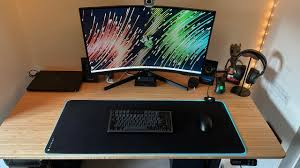
One of the biggest productivity killers is “tab flipping.” Trying to write a paper on a 13-inch screen while looking at three different research PDFs is exhausting for your brain and your eyes. Adding a 27-inch 4K monitor to your desk changes the game entirely.
With a dual-screen setup, you can have your primary document open on one screen and your research or coding terminal on the other. This visual expansion allows for better flow and deep work. If you are a computer science student juggling multiple languages, you might find that high-level projects become overwhelming. In those moments when the logic gets too complex, it is common for students to pay for programming assignment support to see how professionals structure their code, and seeing that code on a large, vertical monitor makes learning much more efficient.
Ergonomics: Protecting Your Physical Health
You cannot maintain high performance if your back is aching and your wrists are sore. Most dorm chairs provided by universities are notoriously bad for long sessions. Investing in a high-quality ergonomic chair with lumbar support is the best gift you can give your future self.
In addition to the chair, consider these three physical upgrades:
- Laptop Stand: Raise your screen to eye level so you aren’t hunched over.
- Mechanical Keyboard: These provide better tactile feedback and reduce typing fatigue during long essays.
- Vertical Mouse: This keeps your wrist in a natural “handshake” position, preventing carpal tunnel issues during marathon study sessions.
Audio Control: Designing Your Acoustic Environment
Dormitories are loud. Between floor mates playing music and the general hum of campus life, concentration is hard to come by. Noise-canceling headphones are a non-negotiable part of a high-performance setup.
Instead of just playing music, try using “Brown Noise” or “Lo-Fi” beats. These frequencies are proven to mask background chatter and help the brain enter a “flow state.” When you have your headphones on and your focus is locked, you can churn out a week’s worth of work in a single afternoon.
Lighting for Focus and Circadian Rhythm
Standard overhead fluorescent lights are harsh and can cause headaches. To create an environment conducive to deep study, you need layered lighting. A high-quality desk lamp with adjustable color temperatures is essential.
Use “Cool White” light during the morning and afternoon to stay alert and mimic daylight. As evening approaches, switch to “Warm Yellow” tones to reduce blue light exposure. This helps your brain prepare for sleep even if you are working late, ensuring that you wake up refreshed for your 8:00 AM class.
Cable Management: Clear Desk, Clear Mind
A cluttered desk leads to a cluttered mind. When your workspace is covered in tangled chargers and HDMI cables, it creates a subtle sense of stress. Use cable sleeves, under-desk trays, and magnetic clips to hide the mess.
A clean, minimalist desk makes it easier to sit down and start working. When there are no physical distractions in your peripheral vision, your ability to stay on task increases significantly. Think of your desk as a cockpit—everything you need should be within reach, but nothing should be in the way.
The Hybrid Workflow: Digital and Physical Tools
While this is a tech setup, don’t ignore physical tools. A large desk pad that doubles as a mouse mat provides a comfortable surface for your arms. Many top-performing students also keep a physical whiteboard or a simple paper planner next to their monitors.
There is something about physically crossing off a task that provides a dopamine hit tech can’t replicate. Use your digital tools for the “heavy lifting”—research, drafting, and data analysis—and use your physical tools for daily goals and brainstorming.
Power and Connectivity
Nothing kills momentum faster than a “Low Battery” warning when you are in the middle of a breakthrough. A high-wattage power strip with built-in USB-C ports ensures all your devices—phone, tablet, laptop, and headphones—stay charged.
If your dorm Wi-Fi is spotty, consider an Ethernet-to-USB-C adapter. A hardwired connection is always more stable than wireless, which is crucial for uploading large files or participating in high-stakes online exams without the fear of a connection drop.
Smart Decor and Room Atmosphere
Finally, add some life to your space. A small desk plant, like a succulent or a snake plant, improves air quality and provides a touch of nature in a concrete dorm. Smart LED strips behind your desk can also help set the mood; blue for focus, green for calm, and red for late-night sessions to protect your eyes.
By treating your dorm room as a professional workspace rather than just a place to sleep, you set a psychological boundary that triggers your brain to work as soon as you sit down. This setup isn’t just about spending money on gadgets; it’s about building a system that supports your academic goals and your long-term well-being.