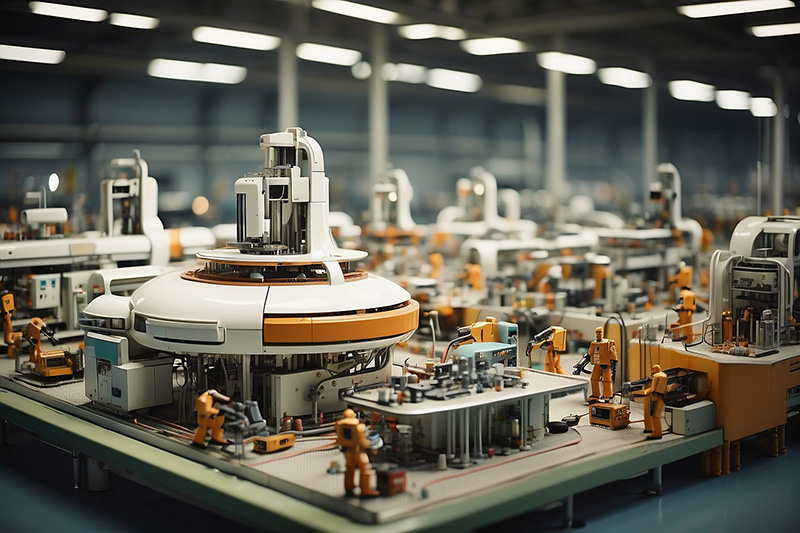
Material Precision in the Evolving Technology Landscape
The technology sector continues to evolve at a rapid pace, driven by advancements in computing, electronics, and digital infrastructure. While innovation is often associated with software and hardware design, the materials that support these systems play an equally important role. From micro-scale fabrication to large-scale data infrastructure, materials must deliver consistent performance under highly controlled conditions.
In precision-driven environments, PVOH is often utilized for its controlled solubility, reliable film-forming properties, and compatibility with water-based processing systems commonly used in technology manufacturing. Its contribution is typically indirect, supporting fabrication and assembly processes rather than forming part of the final visible product. This behind-the-scenes role makes it particularly valuable in systems where accuracy and cleanliness are critical.
Precision Requirements in Technology Manufacturing
Technology manufacturing operates at extremely fine tolerances. Even minor inconsistencies in material performance can lead to defects or reduced device reliability.
Materials used in these environments must maintain consistent behavior across temperature variations, mechanical stress, and chemical exposure. Water-compatible polymers help meet these requirements by offering predictable performance during both application and removal.
Thin-Film Applications and Surface Engineering
Thin films are fundamental to modern electronics, including displays, sensors, and semiconductor devices. These films must be uniform and free of defects to ensure proper functionality.
Materials that form smooth, continuous layers contribute to consistent film thickness and surface quality. This precision supports high-performance electronic components and reduces production errors.
Temporary Materials in Fabrication Processes
Many manufacturing processes involve materials that serve temporary roles, such as protective coatings or sacrificial layers. These materials must be removed cleanly without leaving residues.
Controlled solubility is essential in these applications. Materials that dissolve under specific conditions allow for precise removal, protecting sensitive components and maintaining overall product quality.
Cleanroom Compatibility
Cleanroom environments are critical in technology manufacturing. Materials used in these settings must minimize contamination and maintain stability under controlled conditions.
Water-based materials often align well with cleanroom requirements. They reduce reliance on volatile chemicals and simplify contamination control, supporting higher production yields.
Integration With Automated Systems
Automation is central to modern technology manufacturing. Robotic systems and automated processes require materials that behave consistently to maintain efficiency.
Predictable materials reduce the need for manual adjustments and support continuous operation. This improves throughput and ensures consistent product quality.
Role in Flexible and Printed Electronics
Flexible electronics and printed devices represent emerging areas of innovation. These technologies require materials that can be applied in thin layers while maintaining functional performance.
Water-compatible polymers support these applications by enabling controlled deposition and easy modification. Their flexibility allows for experimentation with new device formats.
Supporting Data Infrastructure Hardware
Data centers and digital infrastructure rely on hardware that must operate reliably over long periods. Materials used in these systems contribute to durability and performance stability.
Polymers that maintain integrity under thermal and mechanical stress help extend equipment lifespan. This reliability is essential for maintaining continuous operation.
Optical and Display Technologies
Displays and optical components require materials that maintain clarity and uniformity. Any variation in film quality can affect performance.
Materials that form defect-free layers support accurate light transmission and consistent visual output. This is critical in high-resolution display technologies.
Process Efficiency and Workflow Integration
Technology manufacturing involves multiple interconnected steps. Materials that integrate smoothly into these processes improve efficiency and reduce complexity.
When materials can be applied and removed using similar conditions, workflows become more streamlined. This reduces production time and lowers operational costs.
Research and Development Applications
R&D environments in the technology sector require materials that support rapid experimentation. Prototypes are often adjusted frequently, requiring materials that are easy to handle.
Water-compatible polymers allow researchers to modify designs quickly without extensive cleanup. This accelerates development cycles and supports innovation.
Scaling From Development to Production
Transitioning from prototype to mass production is a critical phase in technology development. Materials must perform consistently across different scales.
Materials with established industrial use provide a smoother transition, reducing uncertainty and supporting efficient scale-up.
Sustainability in Technology Materials
Environmental considerations are becoming increasingly important in the technology sector. Material selection plays a role in reducing environmental impact.
Water-based processing systems reduce emissions and simplify waste management. Materials compatible with these systems support sustainable manufacturing practices.
Workforce Interaction and Process Control
Even in automated environments, human oversight remains essential. Materials that behave predictably reduce the need for troubleshooting and allow workers to focus on optimization.
This improves productivity and reduces operational stress on teams.
Quality Assurance and Reliability
Technology products must meet high reliability standards. Materials that maintain consistent performance under stress contribute to product longevity.
Stable materials reduce failure rates and support quality assurance processes.
Supply Chain Stability
Global supply chains are critical in the technology industry. Materials that are widely available and consistently produced support stable operations.
Reliable materials reduce the risk of disruptions and support long-term planning.
The Role of Supporting Materials in Technology
Supporting materials may not be visible in final products, but they are essential to the manufacturing process. They enable precision, consistency, and efficiency across production systems.
Their contribution is indirect but critical to the success of modern technology.
Conclusion
The technology sector depends on materials that can support complex manufacturing processes while maintaining precision and reliability. Water-compatible polymers provide a balance of performance and adaptability that makes them valuable in a wide range of applications.
By enabling clean processing, consistent performance, and efficient workflows, these materials play a foundational role in the continued advancement of technology systems.